

Jazzahead 2026 Reflections.
There are moments each year when the global music community converges in one place—not to speak the same language, but to find common ground through sound. For us, jazzahead! has always been one of those moments. In 2026, as the festival marked its 20th anniversary, that sense of connection felt stronger than ever. Like a well-run platform navigating a complex landscape, jazzahead! once again guided us through a dense and dynamic program of meetings, ideas, and performances. Sweden, this year’s partner country, stood out with a strong artistic presence and a clear, confident approach. Musicians, organizers, and industry professionals came not only to present their work, but to actively engage in a shared process of listening and exchange across cultures.
We have been part of this journey from the start. As a Berlin-founded PR company, we have seen jazzahead! develop from its early 2006 edition into an established international network that continues to evolve. This year carried added significance for us. As we prepare to relocate our main JAZZMEDIA office from Bremen to Tønder, Denmark—while maintaining our Berlin base—this edition marked a transition point, both professionally and personally, within a familiar and trusted environment.
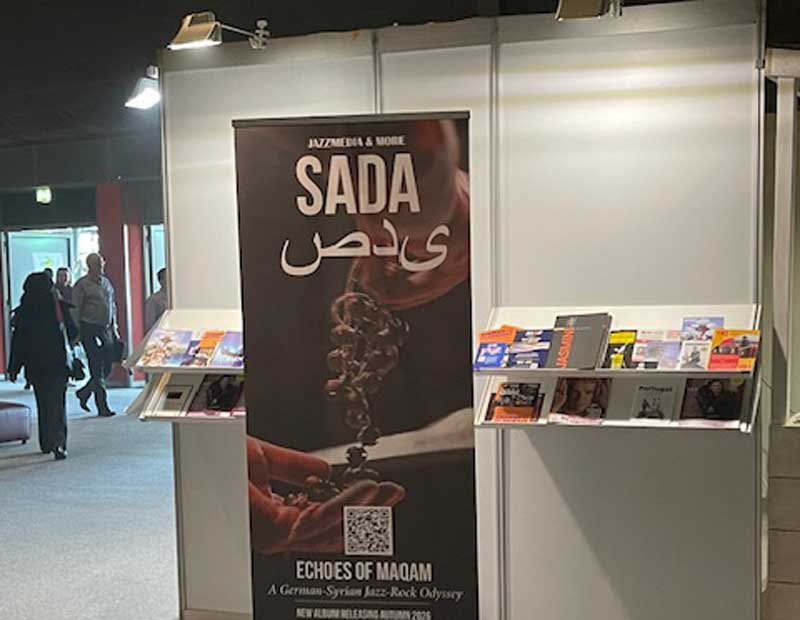
Our activities this year reflected the collaborative spirit at the heart of jazz. We represented Sada, an innovative group combining Arabic maqam traditions with jazz improvisation, creating music that communicates directly through feeling rather than form. Their debut album, recorded at Bauer Studios and set for release soon, highlights how naturally diverse musical traditions can intersect. The project generated strong interest during the event, with several promoters expressing curiosity about future booking possibilities.
In parallel, we highlighted American vocalist Eddie Bruce, whose big band project draws on the classic sound of jazz orchestration. Marking the centenary of Tony Bennett’s birth, Bruce will present a dedicated tribute that brings renewed attention to an artist often overlooked in a year dominated by milestones for Miles Davis and John Coltrane. The response was clear interest and potential opportunities to present the project.
British composer and bassist Michael “Bede” Dunlop also attracted significant interest. His debut introduces a distinctive and thoughtfully developed artistic voice, and we are currently following up on a number of promising opportunities that emerged during the event.
Together with our media partners, we approached this year’s event with a clear strategy. Instead of moving passively through the program, we scheduled 45 meetings over three days, each one contributing to new connections and future opportunities. We engaged with festivals from Reykjavik to Athens, from Estonia to Ireland, and with artists from across multiple regions. These interactions form part of a broader network built not only on planning, but on trust, curiosity, and long-term collaboration.
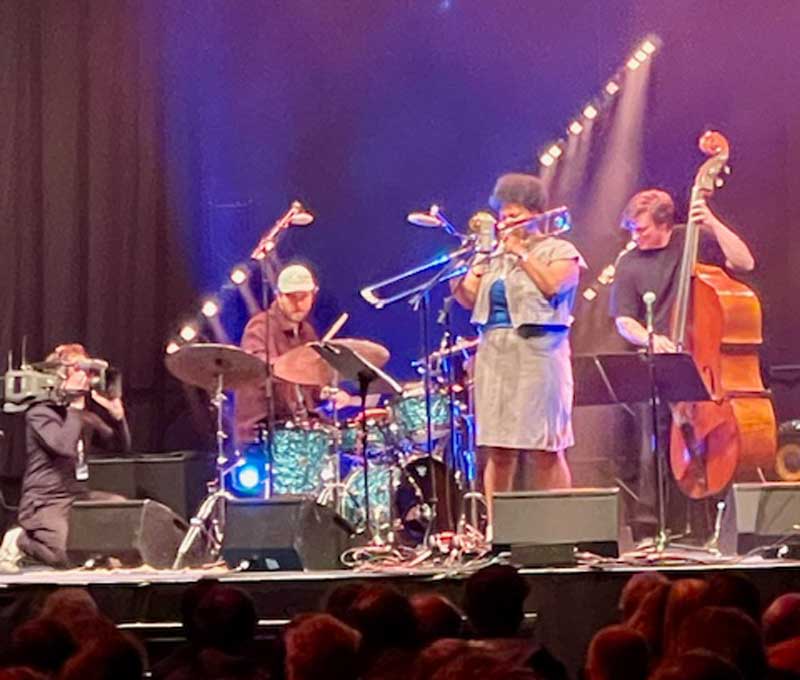
At the same time, some of the most valuable moments were unplanned. Informal conversations, brief encounters, and unexpected exchanges often proved just as impactful. Even without a shared spoken language, there was a clear sense of understanding. This was most evident in the music itself. Two showcase performances stood out in particular. Belgian trombonist Nabou Claerhout delivered a set defined by clarity and precision, with an ensemble that moved seamlessly as a unit. Equally notable was the trio of Redi Hasa, Rami Khalifé, and Bijan Chemirani. Their project, L’Antidote, unfolded as a dialogue between distinct cultural influences, each element retaining its identity while contributing to a cohesive whole.
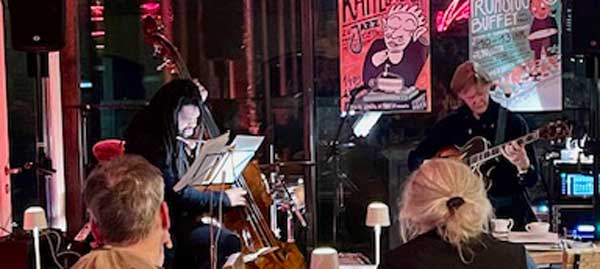
The energy continued into the evening program. During Clubnight, as venues across Bremen and Bremerhaven opened to international audiences, jazz once again proved its strength as a live, shared experience. Our presentation of the Tomas Janzon Trio captured this perfectly—three musicians from different parts of the world, connected through a common musical approach. Stockholm, Salvador da Bahia, Riga, New York, and Paris were all reflected in their sound, yet the result was immediate and contemporary. The audience response was instinctive: movement, engagement, and connection replaced analysis.
In these moments, jazz demonstrated its core function—it removes distance. It creates space for recognition and connection without the need for words. As we move forward into follow-up discussions, new projects, and extended partnerships, one point remains clear: jazz continues to offer a platform where differences drive creativity rather than limit it. In 2027, the Baltic states will take on the partner role, and the process will continue. We will be there—building on what has come before, and ready to listen again.